
Portfolios built to a mandate, and run to it.
Quantamental Strategic Ventures builds portfolios for investors who want their money managed to a method. Profile first. Allocation second. Selection third. Then reviewed, rebalanced and exited by rule.
Private portfolios are rarely built the way institutional ones are.
A mandate, before a product
An institution establishes what a pool of capital is for, and what it may hold, before anything is bought. The individual investor is more often shown a product and asked to decide. QSV begins where the institution begins.
Positions sized against the mandate
Exposure is set deliberately and capped, rather than accumulating through a series of individually reasonable decisions taken years apart. How much to hold is a decision in its own right, and it is treated as one.
Reasoning recorded as it is formed
The case for a holding is written down at the time it is made, not reconstructed afterwards. This is what allows a decision to be reviewed honestly three years later, once the outcome is known and memory has quietly rearranged itself.
Review on a schedule, not on the news
Institutional portfolios are examined at set intervals whether or not anything has happened. A review concluding that nothing should change is a legitimate result, and it is recorded as one.
Most portfolios were never built. They accumulated.
Fourteen schemes doing the work of six
Holdings bought at different times on different recommendations, overlapping so heavily that the same underlying companies are being paid for twice.
An allocation nobody set
Equity drifted upward through a strong run and was never brought back. The portfolio now carries materially more risk than its owner ever agreed to.
No rule for the fall
When markets correct there is nothing written down, so either nothing happens or the wrong thing happens quickly. Both are expensive.
Exits taken without a tax view
Redemptions bunched into a single financial year, gains realised where they need not have been, and losses left sitting in the portfolio unused.
None of these are exotic problems. They are what happens in the absence of a process.
Six stages, in order, every time.
Profile
Financial capacity, risk tolerance, knowledge and experience, and time horizon are assessed as four separate dimensions rather than collapsed into a single risk score. Capacity is what a balance sheet can absorb. Tolerance is what an investor can hold through a drawdown without selling. Treating them as the same thing is how people end up in portfolios they abandon at precisely the wrong moment.
Map
Every goal is dated, sized and ranked. Dependants, committed obligations and near-term liquidity needs are separated from long-horizon capital, because money with a deadline cannot be invested the same way as money without one. Where an obligation is fixed, such as education, it is carved out and funded deliberately rather than left to the portfolio as a whole.
Allocate
Asset class weights are set against the profile and the goal map, across equity, hybrid, debt, precious metals and other holdings, with target bands rather than fixed points. Property, deposits and physical assets already owned are counted in the picture. An allocation that ignores what an investor already holds is not an allocation.
Select
Category by category, judged on rolling returns rather than point-to-point figures, on consistency across full market cycles rather than one strong year, and on risk-adjusted measures rather than headline performance. Funds are grouped by what their portfolios actually hold, since a regulatory label often describes the exposure poorly. Overlap between holdings is measured, and concentration with any single asset manager is capped.
Run
Reviewed periodically rather than only when something goes wrong, and rebalanced back to target when weights drift outside their bands. A buffer is held deliberately, with deployment triggers agreed in advance at defined levels of market correction. The point is not to predict the fall. It is to have already decided what happens when it arrives, so the decision is not taken under pressure.
Exit
Redemptions are sequenced across financial years so that realised gains stay within the annual exemption wherever the timeline allows. Losses sitting in the portfolio are harvested deliberately to offset gains elsewhere, and where an investor holds direct equity alongside funds, the two are coordinated rather than treated separately. Holding periods and exit loads are checked before anything is sold.
The right structure depends on whose money it is.
Professionals building wealth
Doctors, lawyers, and senior technology and finance professionals earning well, with a surplus growing faster than the time available to manage it.
We consolidate holdings accumulated over the years into a single allocation, direct monthly contributions toward it rather than by habit, and take the ongoing management off your hands entirely. Within a year you should be able to describe your own portfolio in two sentences, and know exactly what happens when the market falls twenty percent.
Senior executives and CXOs
Leaders whose compensation includes stock, options or performance units, and whose personal wealth has come to track a single company's share price.
We measure that exposure against your whole position, agree a level you are genuinely comfortable holding, and reduce toward it on a written schedule sequenced around vesting dates, trading windows and the tax arising on each tranche. The proceeds have somewhere to go before they arrive.
Business owners and promoters
Founders and promoters whose wealth and income both depend on the company they built, with surplus arriving in lumps rather than monthly.
We build a personal balance sheet that stands on its own, diversified away from the sector that already carries your livelihood, with a liquidity reserve that stays reserved and a written approach for deploying irregular receipts. Where a sale or liquidity event is anticipated, the work begins well before it.
Income that arrives by project
Actors, sportspeople, designers, consultants and independent professionals, whose earnings can be substantial but arrive unevenly, and without the provident fund, gratuity or pension an employer provides.
We size a reserve against the longest gap you can reasonably expect between projects, then invest deliberately above it, with a rule agreed in advance for what happens each time a payment lands: what is set aside for tax, what tops up the reserve, and what is deployed.
Approaching or in retirement
Investors moving from building capital to drawing on it, where a portfolio designed to grow now has to pay.
We separate capital by when it will be needed, hold several years of withdrawals where no market fall can reach them, and sequence drawdowns so the tax position is part of the plan rather than discovered afterwards. The risk that matters in retirement is not volatility but the order in which returns arrive, and it is planned for directly.
Non-resident Indians
Indians living abroad, investing into India across two tax systems and a considerable amount of paperwork.
We handle the mechanics once and properly, from NRE and NRO account structure and KYC through to FATCA declarations and nomination, then build the portfolio around your residency status, the currency your obligations are in, and whether you intend to return.
Families and the family office function
Households where capital sits across several members and entities, assembled over decades under different advice, with nobody holding the complete picture.
We set one allocation at household level, produce consolidated reporting across every holder, carve out and fund obligations with a date attached, and coordinate exits across the family so gains are managed for the household rather than one person at a time. Your lawyer, chartered accountant and insurance specialist are brought into the same conversation rather than left for you to reconcile.
If one of these describes you, start a conversation.
The instrument follows the allocation, never the other way round.
Specialised Investment Funds
A SEBI category introduced in 2025, sitting between a mutual fund and a portfolio management service. The mandate is wider than a mutual fund permits, including the ability to profit from a decline through derivatives.
We assess the strategy, the manager and the redemption terms, and size a Specialised Investment Fund as a satellite alongside an established core rather than as a holding that could come to dominate a portfolio.
Portfolio Management Services
A portfolio of securities held in your own name and run by a professional manager under a defined mandate, subject to the regulatory minimum.
We compare PMS mandates on concentration, process and cost, and weigh the tax consequence of a manager transacting in your name, which is the difference most often underestimated. Where a pooled vehicle would achieve the same objective more efficiently, we will say so.
Mutual funds
The instrument most allocations are built with. Asset class weights are set first across equity, hybrid, debt, precious metals and liquidity, then categories are chosen for the role each has to play.
Funds are selected within each category on rolling returns rather than one convenient start-to-end figure, on consistency across a full market cycle rather than a single strong year, on the risk taken to produce the return, and on what the portfolio actually holds rather than the label it carries. Overlap is measured across the whole portfolio, and exposure to any single asset management company is capped.
Alternative Investment Funds
Private equity, private credit, real assets and long-short strategies, available to investors meeting the regulatory minimum.
We weigh the lock-in against your liquidity needs, the manager's record through a full cycle, and how the exposure is likely to behave alongside what you already hold. An AIF is an addition to a settled portfolio, never a substitute for building one.
Fixed income, REITs, InvITs and other opportunities
Bonds, non-convertible debentures and deposits, alongside real estate and infrastructure investment trusts. These are held for stability, income or diversification rather than for growth.
Suggested on the basis of the role the holding has to play in your allocation, whether that is funding an obligation with a date attached, holding the near-term end of a retirement portfolio, or providing diversification the equity book cannot.
Further categories are taken up as access to them develops, and judged on the same basis. A holding that cannot be explained in terms of the job it does in your portfolio does not belong in it.
Which of these belongs in a portfolio is a question of profile, not preference. Start a conversation.
The QSV Investor Profile
Before the first substantive conversation, we send you a structured questionnaire. It takes around ten minutes, assesses four dimensions of how you invest, and resolves to a defined investor archetype. Nothing is recommended until it is complete, and it is revisited as circumstances change.
It is shared directly rather than published, so that the profile, and the conversation that follows it, stay yours.
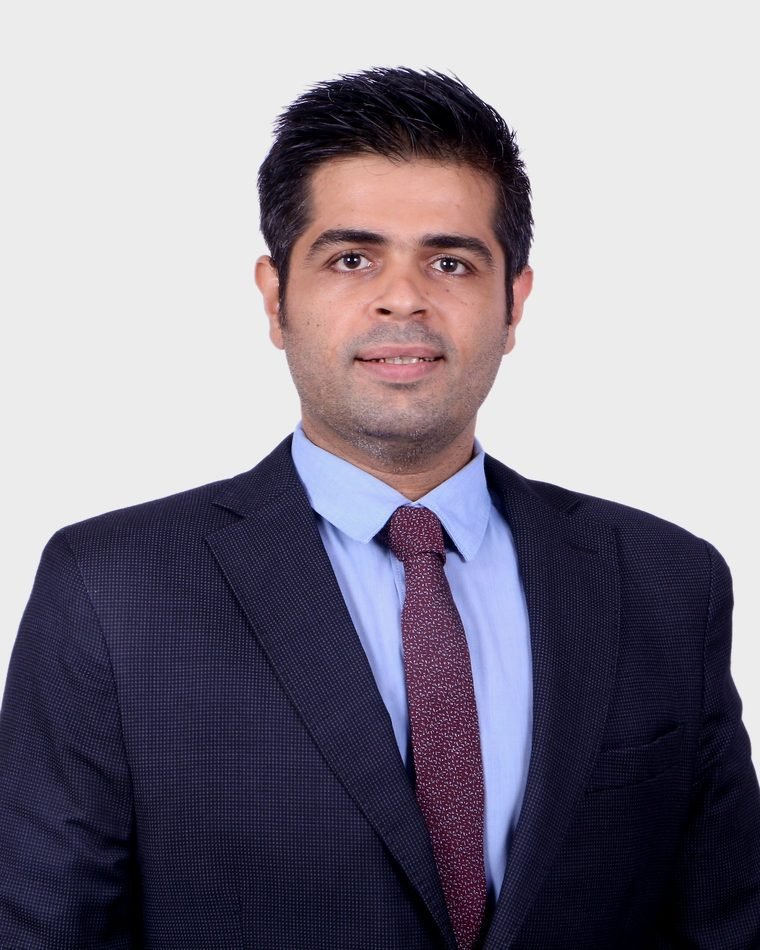
Rajesh brings more than fifteen years of experience across institutional finance and technology, with deep expertise in investment management. He has worked with the investment teams of private equity firms, private credit funds, family offices, wealth managers and investment banks, gaining a close understanding of how institutions evaluate, allocate and monitor capital.
Rajesh holds the CFA charter. His work focuses on asset allocation, fund selection and manager due diligence, portfolio construction across full market cycles, and the tax-aware sequencing of exits.
He began his career in technology, on the software and coding side, building enterprise systems for banks and credit card issuers. The work gave him a working understanding of how financial institutions operate day to day, and a discipline of documentation and process that carries into how he runs portfolios today.
Rajesh has completed an MBA in finance and is based in Mumbai.
Start with a conversation.
If you would like to discuss your existing portfolio, write in and we will take it from there. Every enquiry is read and answered personally.